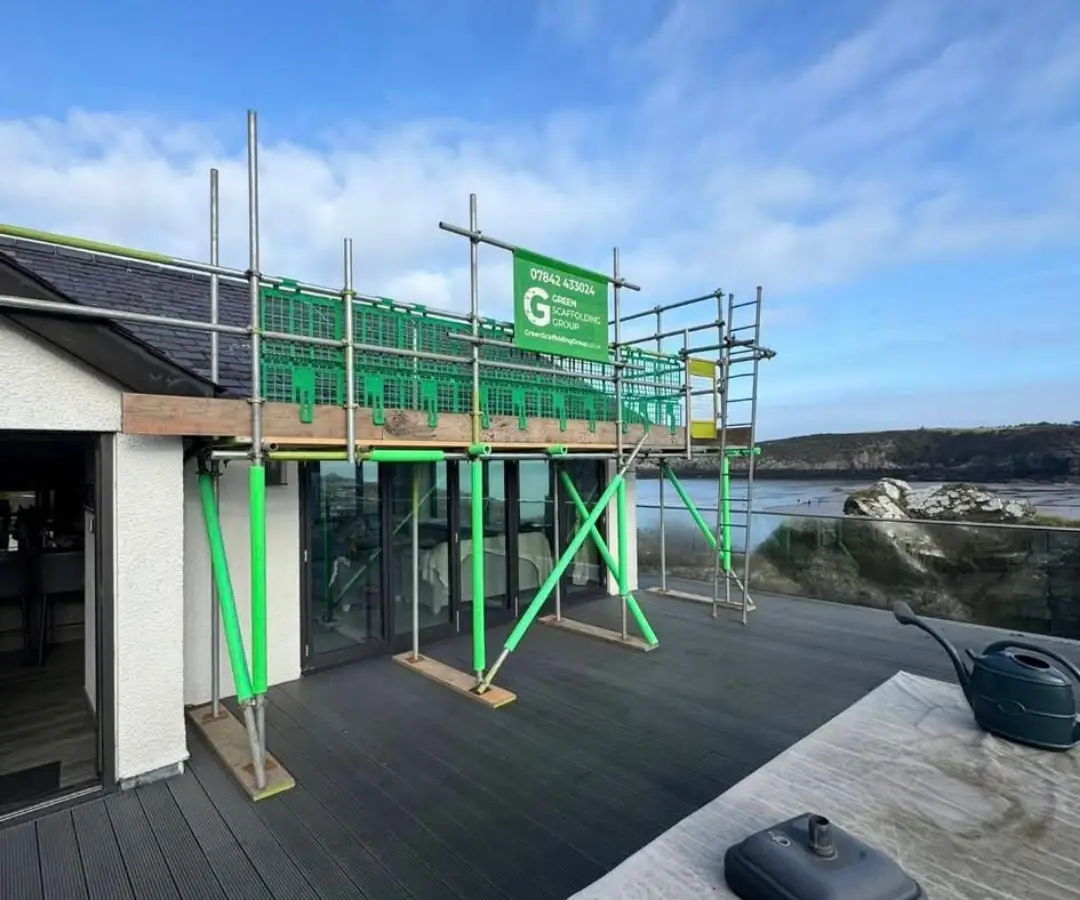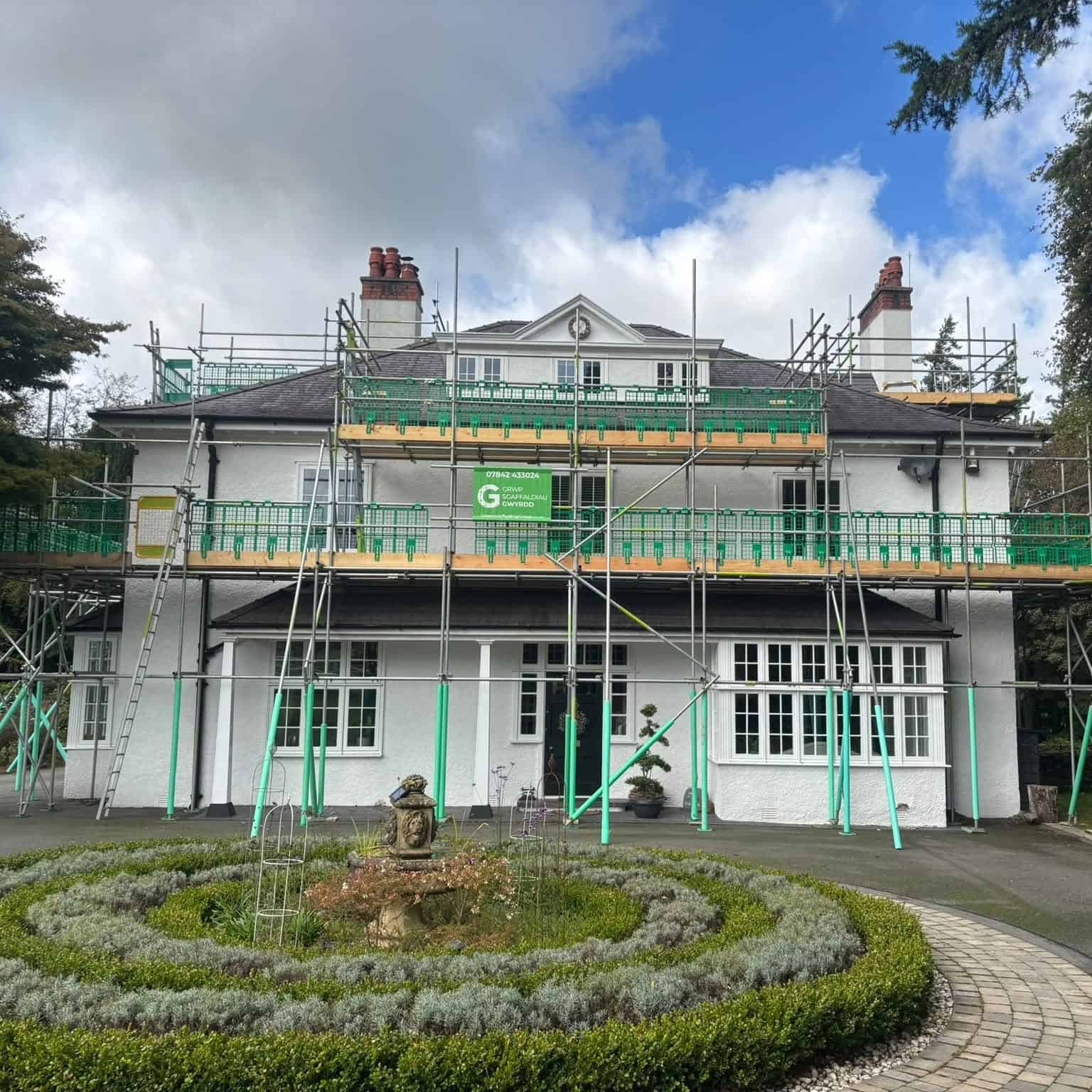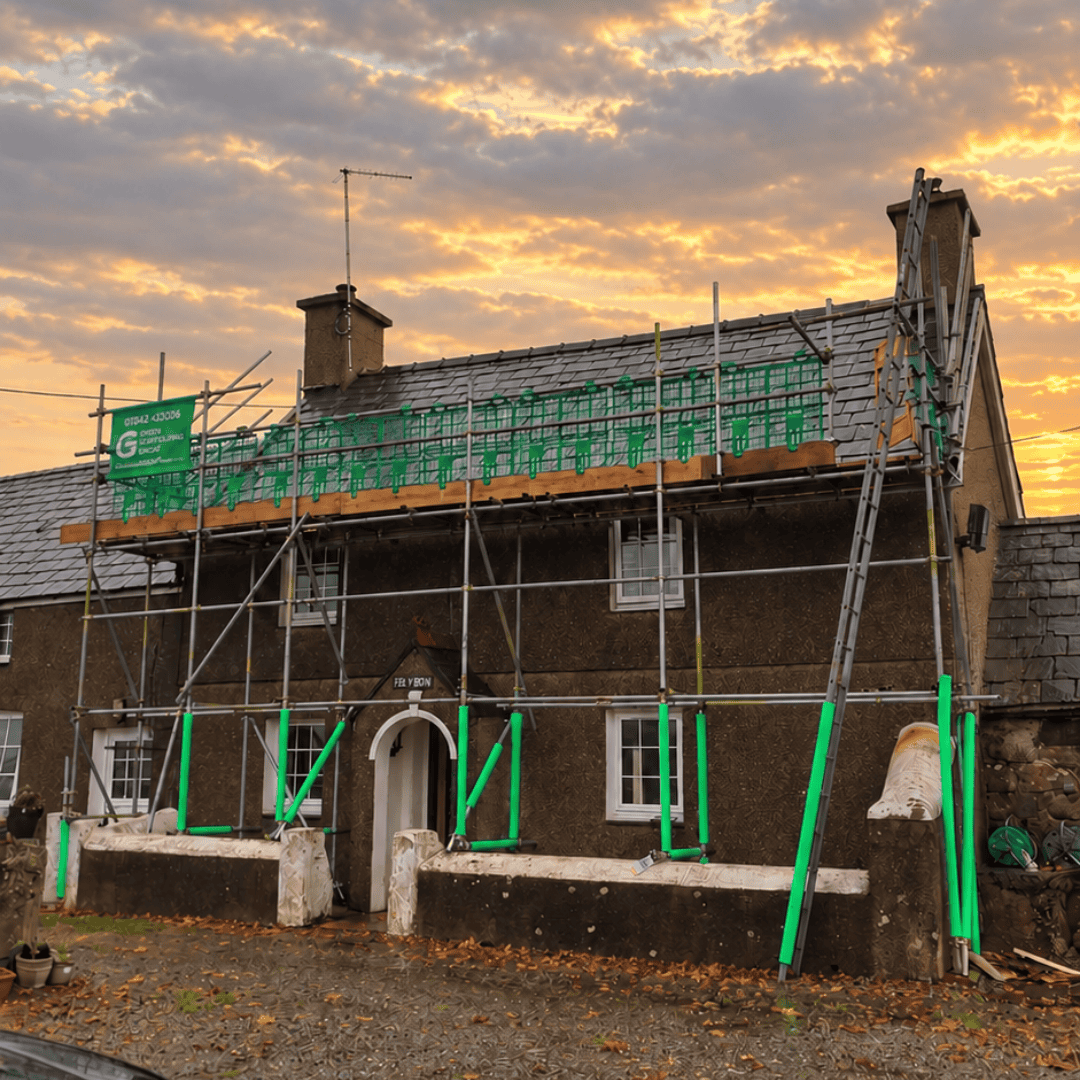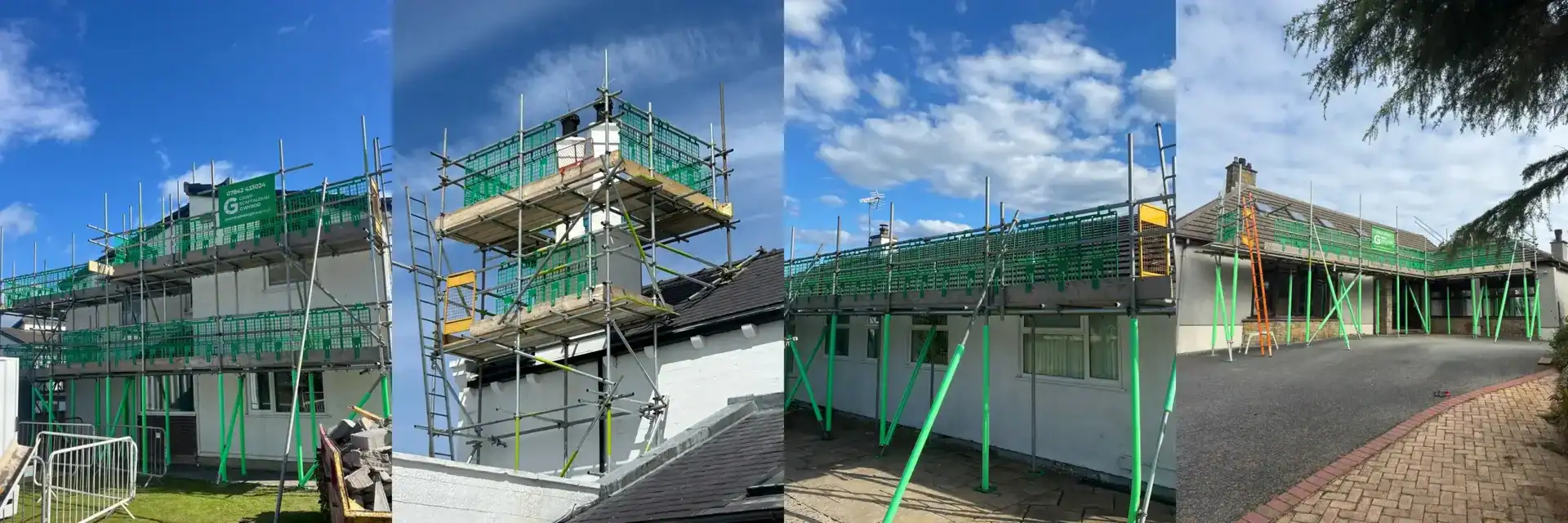
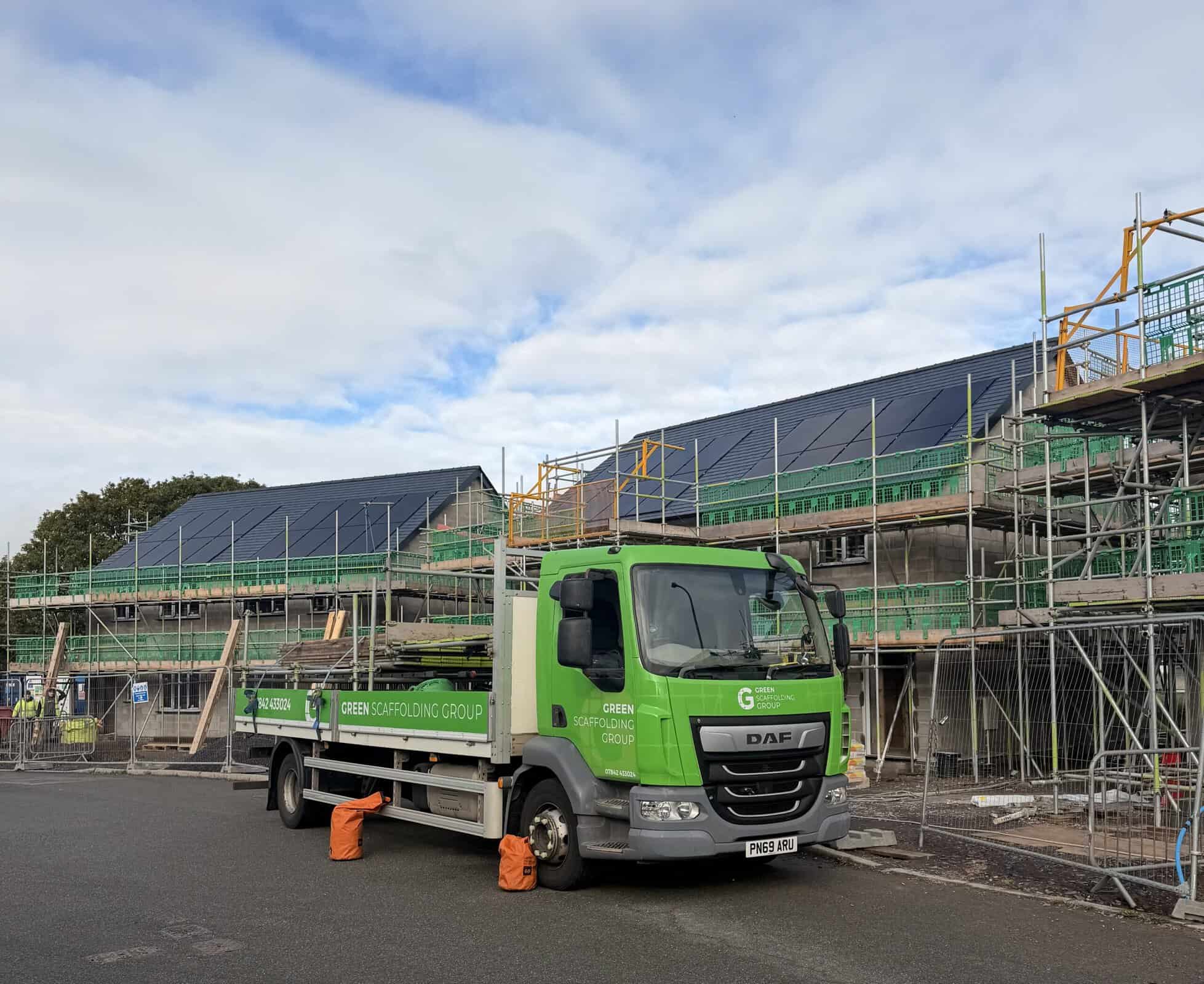
If you’re arranging scaffolding for the first time, you might know what work needs doing but be less sure about everything around it. What information do we need? Do you need scaffolding around the whole house? And who do you contact when it’s ready to come down?
At Green Scaffolding Group, we help homeowners and businesses across North Wales arrange access for their projects. Here’s what the process involves, from your first enquiry to the team returning to dismantle the scaffold.
The short answer is that it can stay in place for the agreed hire period, with an extension arranged if you need more time. Here’s how that works with Green Scaffolding Group.
1. Tell us about the work you're planning
It starts with a conversation. You can call, email or use our website enquiry form to tell us about your project.
The most useful details to send are:
- The property address.
- What work is being carried out, such as roofing, painting, chimney repairs or a solar installation.
- Which parts of the building your tradespeople need to reach.
- When you would like the work to start.
- How long you expect to need the scaffolding.
- Photos of the building and any access restrictions.
You don’t need to know the technical names or have the scaffold worked out yourself. If you’re unsure what’s needed, explain the job and we can discuss it with you or your contractor.
Photos are especially helpful for showing things such as a narrow driveway, a conservatory or an extension below the area being worked on.
2. We look at the access your job needs
Scaffolding needs to suit the work being carried out. A roofer reaching the eaves may need a different arrangement from a builder working on a chimney or an extension.
We’ll look at the information you’ve provided and let you know if we need more details or a site visit to assess the job properly.
This includes considering the building’s height and shape, the ground below it, access for our team and any obstacles. We also need to understand how your tradespeople intend to use the scaffold.
You may only need access to one side of the property. On other jobs, scaffolding may need to cover several sides or bridge over an extension. Understanding this early helps us quote for the access you actually need.
3. You receive a quote for the job
The price depends on the scaffold required, how straightforward it is to erect and the hire arrangements.
Two similar-looking houses can need different scaffolding. An awkward roofline, limited access or a conservatory beneath the work area can all affect the setup.
At GSG, our initial hire period is 12 weeks. If your project needs longer, get in touch so we can discuss an extension and explain the additional weekly charge.
Before accepting your quote, make sure you understand the scope of the work and the hire terms. If anything is unclear, ask us to talk it through. It’s also worth checking that your builder or roofer is happy with the access proposed.
4. We arrange the installation
Once you’ve accepted the quote, we’ll discuss an installation date around your project and our availability.
Tell us when your tradespeople are due to start, and let us know if their plans change. Keeping everyone updated helps avoid scaffolding arriving before it’s needed or work being held up while access is arranged.
Before the team arrives, we’ll discuss any access arrangements. You may need to move vehicles, garden furniture or other items from the working area.
If getting to the scaffold requires access through a locked gate or another part of the property, that needs to be arranged too.
5. The team erects the scaffolding
Our scaffolders put up the agreed scaffold so your tradespeople can reach the areas they need to work on.
The time this takes varies with the size and complexity of the job. A straightforward setup on a house will be different from a larger scaffold or one with difficult access.
Keep children, pets and anyone not involved in the work away from the area while erection is underway.
The scaffold must be inspected by a competent person before first use. Your contractor should also understand the arrangements for ongoing inspections and any restrictions on how it can be used.
6. Your project gets underway
Once the scaffold is ready for use, your tradespeople can begin their work.
If the job changes and they need access somewhere else, contact us. Don’t move boards, remove rails or alter the scaffold yourself, and don’t let other trades make adjustments. Alterations need to be carried out by competent scaffolders.
If something appears damaged or has been disturbed, keep people off the affected scaffold and report it so it can be checked.
Delays can happen too. Weather, materials or changes to the work may mean you need the scaffolding for longer than expected. Let us know as soon as you can so we can discuss the hire extension.
7. Let us know when it's ready to come down
When the work is finished, check with your contractor that everyone has completed the tasks they need the scaffold for.
For example, the roof may be finished, but someone might still need access to paint the fascia boards or complete a final repair.
Once it’s no longer needed, contact us to arrange dismantling. Removal needs to be booked into the team’s schedule, so giving us notice helps us plan it.
8. We return to dismantle and collect it
Our team returns to take down the scaffolding and remove the equipment.
As with installation, we’ll need access to the working area. Keeping vehicles and other obstructions clear helps the team carry out the dismantling.
Once the scaffold has been removed, you can get back to using the space around your property.
Need a scaffolding in North Wales?
Start by telling us what work you’re planning and where the property is. If you have photos or details from your contractor, send those over too.
Or call the team on 01248 572572