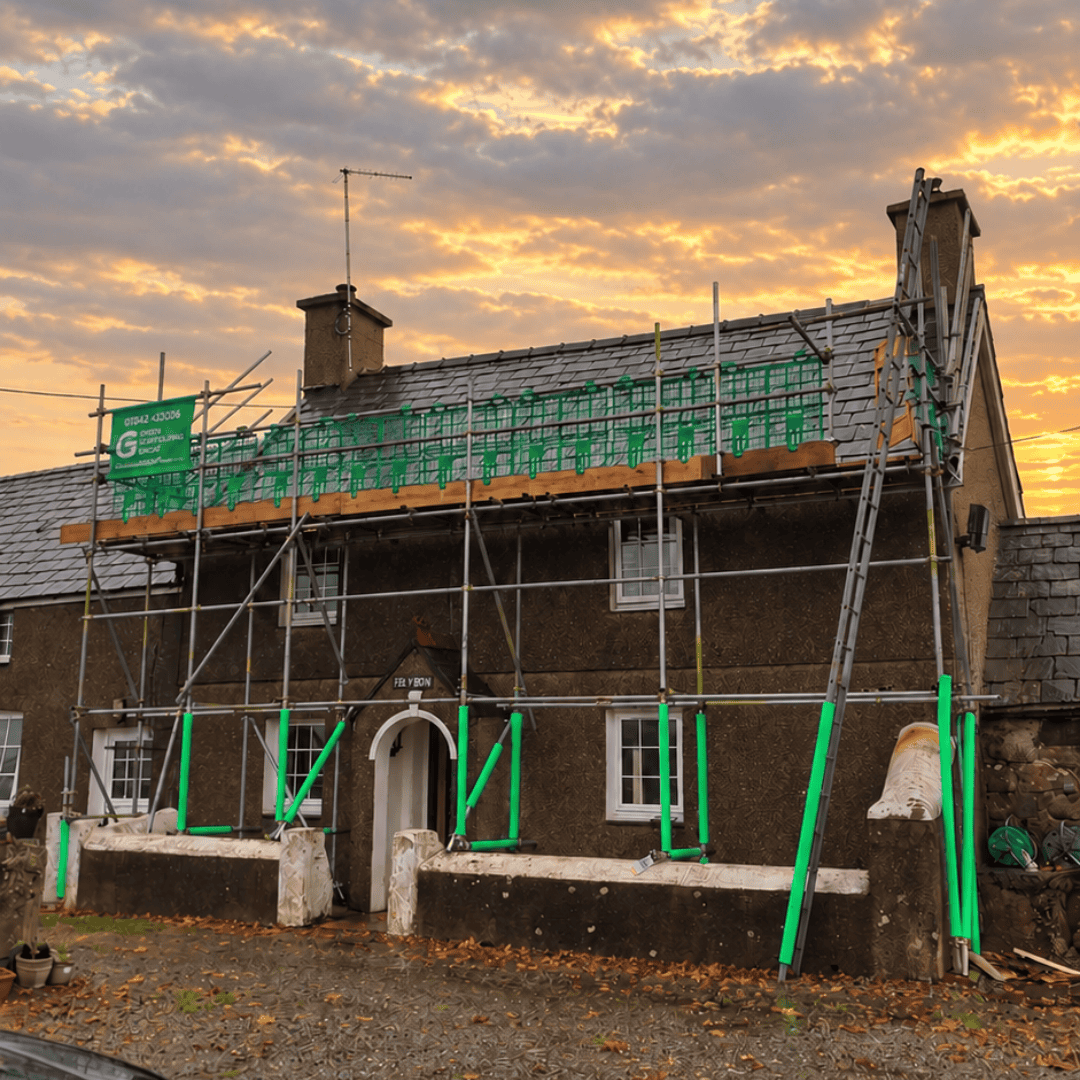
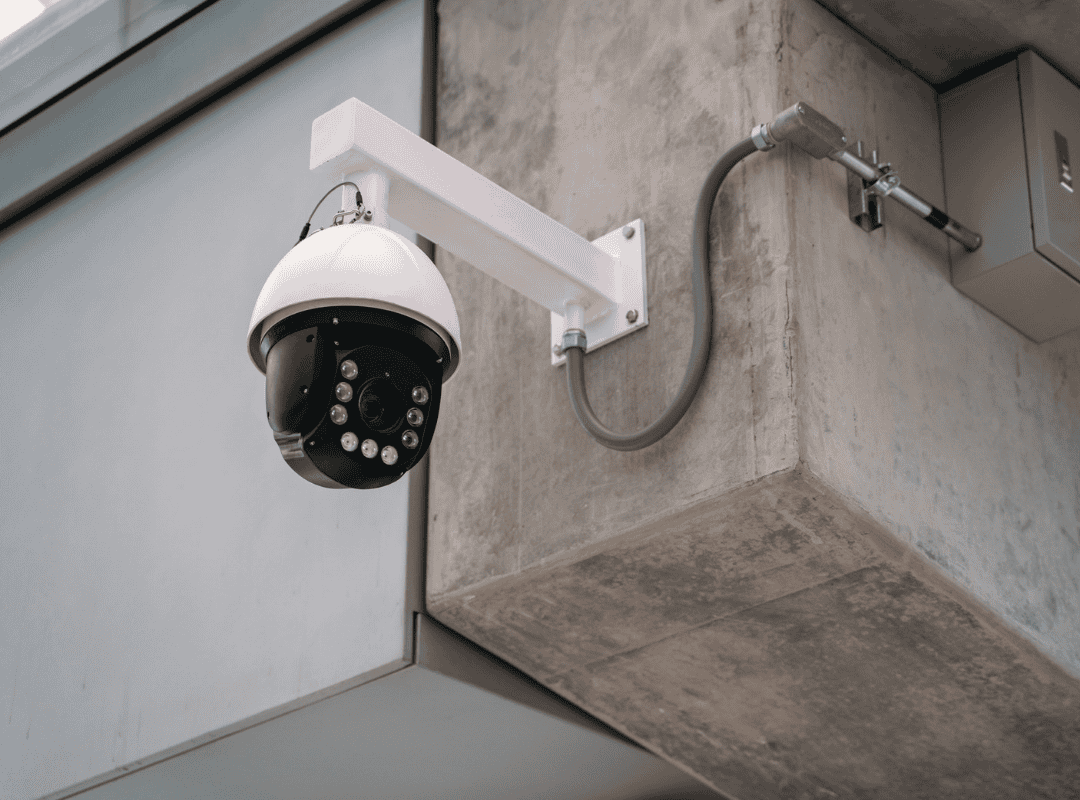
You’ve booked the roof repairs, organised the builder and started thinking about scaffolding. Then you look up at the wall: there’s a satellite dish, a security camera and a light right where the work needs to happen.
Will they need moving?
Not necessarily. Satellite dishes, CCTV cameras and outdoor lights can sometimes stay where they are while scaffolding is up. It depends on the scaffold layout, the work being carried out and whether the equipment can still operate safely and effectively.
The best time to flag them is when you request your scaffolding quote. A few photos and a quick conversation can help identify anything that needs planning before installation day.
Can scaffolding block a satellite dish signal?
Yes. Scaffolding can interrupt satellite TV if tubes, boards or other materials obstruct the signal path between your dish and the satellite. The dish does not have to be touched or moved for this to happen.
That means a dish can look completely undisturbed while your television displays a “no signal” message.
Whether you’re likely to have a problem depends on where the dish points and where the scaffold needs to sit. Keeping a clear space immediately in front of the dish may not be enough: the signal path extends beyond it.
Tell your scaffolding company where the dish is and whether you use it. Where practical, its position can be considered when planning the scaffold, although safe access for the work must come first.
Will scaffolding affect my CCTV cameras?
A CCTV camera may stay powered and connected while scaffolding changes what it can see.
For example, a camera that normally covers your driveway could end up looking at a scaffold board. A tube across the picture might also hide part of a doorway or side passage.
Before installation, point out which cameras cover important areas, such as your front door, driveway or rear entrance. Once the scaffold is up, check the live view from each camera.
Check the camera picture after dark too
Daytime footage does not tell the whole story. Nearby obstructions can reflect infrared light back towards some night-vision cameras, affecting the image after dark.
Check that you can still see the areas you need to monitor, rather than just confirming that the camera is recording. Building activity may also create extra motion notifications, depending on your camera and settings.
If coverage is affected, speak to your security installer about adjusting or temporarily repositioning the camera. Any change involving scaffold attachments must be agreed with the scaffolding contractor first.
Do outdoor lights need removing before scaffolding goes up?
Outdoor lights do not automatically need removing. However, their position, wiring and the space needed for the work should be considered before the scaffold is erected.
A wall light might sit close to a platform, shine directly into someone’s working area or become obstructed by boards. A motion sensor may also respond differently once workers and scaffold components are nearby.
Point out security lights, wall lights, visible cables and any damaged fittings when discussing the job. If a light needs disconnecting, relocating or having its wiring altered, arrange this with a qualified electrician.
Where work could disturb or damage electrical equipment and create danger, the relevant supply needs proper isolation by a competent person. Simply switching a light off is not a substitute for safe electrical isolation.
If a light normally illuminates your entrance or steps, discuss how those areas will remain adequately lit during the work.
What should I tell the scaffolding company before installation?
You do not need to work out the scaffold layout yourself. The most useful thing you can do is show the contractor what is already on the building and explain what needs to keep working.
When requesting a quote, include:
- A wider photo of the wall or roof area where access is needed.
- Close-up photos of satellite dishes, cameras, lights and visible cables, taken safely from the ground.
- Details of any equipment that must remain operational.
- Information about shared dishes, communal cameras or neighbouring equipment close to the work.
- The type of work planned, such as chimney repairs, roofing, rendering or painting.
The building work itself may require equipment to move, even if the scaffold could fit around it. For example, a contractor repairing the wall behind a camera may need that camera temporarily removed.
If you rent the property or the equipment is shared, check with the landlord or managing agent before arranging alterations.
What if something stops working once the scaffold is up?
Let your scaffolding contractor know promptly and explain what has changed. A photo of a blocked camera view or details of a TV signal problem can help identify the next step.
Do not move scaffold tubes, boards, ties or protective materials to clear the view. Any scaffold alteration must be assessed and carried out by competent scaffolders.
Depending on the issue, the solution may involve the scaffolding team, your satellite installer, a security specialist or an electrician. Discuss the options before anyone changes the equipment or scaffold.
Planning domestic scaffolding in North Wales?
Small details on the outside of your home can make a big difference to planning the job. Mentioning your dish, CCTV and lights early gives everyone a chance to discuss access, identify potential interruptions and agree any specialist work required.
At Green Scaffolding Group, we provide scaffolding across North Wales for projects including roof repairs, chimney work and property maintenance.
Request a scaffolding quote and send us photos of the area you need to reach. If there’s a satellite dish, camera or outdoor light nearby, include it in the pictures so we can discuss it with you.